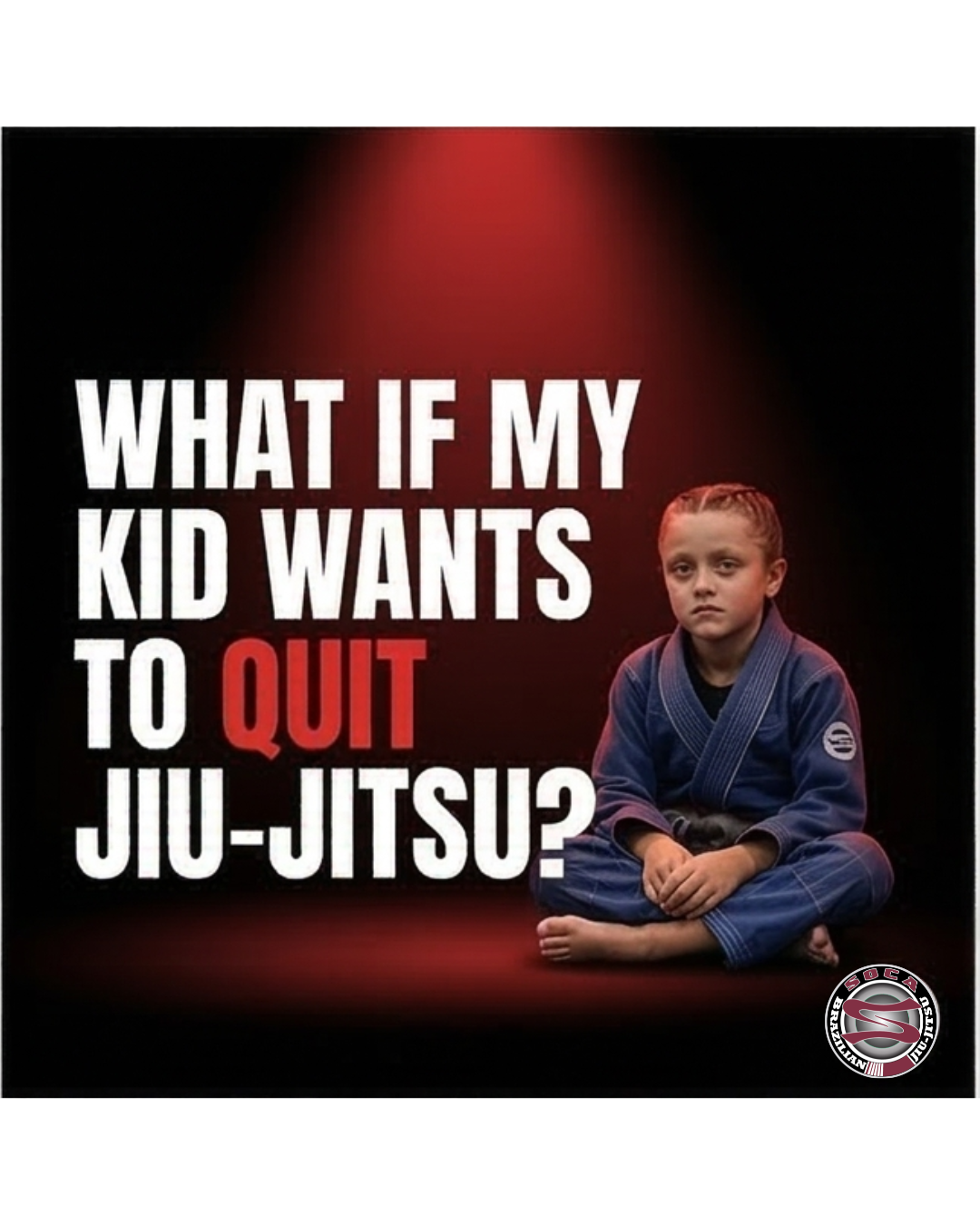
Hearing your child say they want to stop training can be frustrating. When a kid quit Jiu Jitsu, it’s usually not about the sport itself — it’s about what they’re experiencing emotionally.
Understanding that difference helps you respond in a way that actually supports their growth.
Why Kids Want to Stop Training
Most kids don’t quit randomly — there’s usually a reason behind it.
Training became challenging
As they improve, classes get harder. Struggling and losing can feel discouraging.
They feel embarrassed or uncomfortable
Kids often don’t express emotions clearly. Instead of saying they feel insecure, they say they want to stop.
The excitement wore off
At first, everything is new and fun. Later, discipline and repetition take over.
They compare themselves to others
Watching teammates progress faster can lead to frustration and self-doubt.
They’re testing boundaries
Sometimes, kids just want to see what happens if they push limits.
How to Respond When Your Child Wants to Quit
Your reaction matters more than the situation itself.
Stay calm and curious
Ask:
👉 “What’s making you feel this way?”
Find the real issue
Once you understand what’s behind it, you can actually help.
Create a short-term commitment
Try:
👉 “Let’s finish a few more classes and then decide.”
Work with the coach
A good coach can adjust training and rebuild confidence.
The American Academy of Pediatrics emphasizes that consistency in structured activities helps children develop resilience and emotional strength.
Praise effort over results
Focus on:
- Showing up
- Trying
- Improving
Not just performance.
The Importance of a Supportive Environment
A child’s experience depends heavily on where they train.
At Soca Brazilian Jiu-Jitsu San Diego, we focus on:
- A family-centered atmosphere
- Building confidence step by step
- Helping kids feel safe while learning
This type of environment often helps kids move past moments of doubt.
What Kids Gain by Pushing Through Challenges
When children learn to continue even when it’s hard, they develop:
Resilience
They understand that difficulty is part of growth.
Confidence
Confidence comes from overcoming challenges.
Emotional control
They learn to manage frustration and discomfort.
Discipline
A skill that carries into school and life.
The Centers for Disease Control and Prevention also highlights how regular physical activity supports mental and emotional well-being in children.
When It Might Be Time to Stop
Sometimes stepping away is the right choice — but not during a moment of frustration.
A helpful rule:
👉 Don’t make decisions on a bad day.
Support Your Child the Right Way
With the right guidance and environment, most kids move past this phase and grow stronger because of it.
At Soca Brazilian Jiu-Jitsu San Diego, we help kids build confidence, resilience, and a long-term love for training.
👉 Contact us to learn more:
https://socabjjsandiego.com